THE FOUNDATIONS OF PROFESSIONAL CLOTHING PRODUCTION
The Garment Maker’s Support
Transform your workshop into a professional, production-ready space with expert patterns, refined sewing, and efficient processes that make your brand stand out.
THE FOUNDATIONS OF PROFESSIONAL CLOTHING PRODUCTION
The Garment Maker’s Support
Transform your workshop into a professional, production-ready space with expert patterns, refined sewing, and efficient processes that make your brand stand out.
The Garment Maker’s Support is a done-for-you, hands-on service for businesses and institutions, who are ready to implement professional pattern cutting and sewing techniques in their workshops—so they can produce well fitted and professionally finished garments.
The Foundation of Professional Clothing Production
Is the focus of The Garment Maker’s SUPPORT.
Pattern Cutting & Professional Sewing Techniques form THE solid foundation of a garment production business.
Set the right foundation, and your output will not only look better—it will be easier to produce, cost-effective, and trusted by your customers.
01/
Pattern Cutting
Pattern cutting is the process of turning a garment design or sketch into a blueprint that guides how fabric is cut and assembled.
It ensures that every piece of the garment fits together precisely and consistently.
Think of pattern cutting as the architect’s blueprint in construction.
You may have a beautiful house in mind, but without precise plans, the builder won’t know how to lay the foundation, where the windows go, or how the structure holds together.
02/
Professional Sewing Techniques
Sewing techniques refer to the professional methods used to assemble garments for a high-quality finish, correct fit, and durability.
From seam construction to finishing details, these techniques elevate a garment from “homemade” to production-ready.
Think of sewing techniques as the builder’s skillset—the tools and craftsmanship that bring those blueprints to life.
Without skilled workmanship, the structure may be correct–but the garment will look messy and unprofessionally done
Is This You?
Dependency on tailors /Fundis**
You find yourself fully dependent on a fundi /tailor because he holds the knowledge of your designs and without him you are stuck
difficulty in adding variety to a collection
Adding new designs feels excessively time-consuming, resource-wasteful, and yields inconsistent results.
theft of designs & patterns
You’ve experienced theft of designs and patterns—only to see your creations sold by competitors or to face the frustration of recreating them from scratch.
tired of relentless price wars
Rising price competition and undercutting have shown that depending solely on price as a competitive advantage is unsustainable.
lack of knowledge
You lack knowledge on how to cut & make clothing professionally with the correct tools & equipment
I can help you solve the challenges that
come with garment manufacturing
through the implementation of
professional garment making practices
in your workshop
With over a decade of hands-on experience in kenya’s fashion industry, i’ve mastered the art & science of creating garments that fit beautifully, look polished and stay looking good wear – after – wear.
Over the past 10+ years, I’ve designed, made, and sold a wide range of garments, working with countless body types and fabric variations. Every collection I released became a learning ground: I carefully observed how clothes fit real customers, gathered their feedback, and refined patterns to achieve an exceptional fit.
I’ve worked with a wide range of fabrics, learning how each fabric falls, moves and responds to different designs. These insights inform every pattern I draft and every sewing technique I use, ensuring that garments not only look beautiful, but also feel right on the body.
It is this dedication to fit, detail and professional finishing that earned me loyal clients who consistently returned because they knew they could trust the quality and fit of my brand.
And I can do it for you as well
When you work with me, you’re not just learning techniques; you’re are learning the foundation of garment construction from someone who has done it.
What I Can Implement For You
Scroll Through The Tabs To View The Content
TAB 1: Size chart
01/ Size Chart Setup
We begin by selecting a size chart for your brand from standard international size charts, which can later be customised to suite your specific target market.
This minimizes common fitting issues for your target market and gives your brand a subtle yet powerful edge. Your customers will notice and appreciate the superior fit of your garments.
Statements such as “The clothes from this brand fit me well” stem from using customized size charts that are thoughtfully tailored to your target clients.
For example, this illustration shows the adjustments a brand made to their size medium measurements when they found the standard proportions were consistently a tight fit on the waist and hips.
TAB 2: sample making - THE SAMPLE
02/ Sample Making: The Sample
To make the sample, we draft the pattern of the selected design in an average size (e.g. medium), starting with the basic block, then adapting to the working pattern, and then extracting the final pattern.
By following this drafting process, you develop ‘pattern records’ that enable quick and effective modifications or reproductions of this and similar designs.
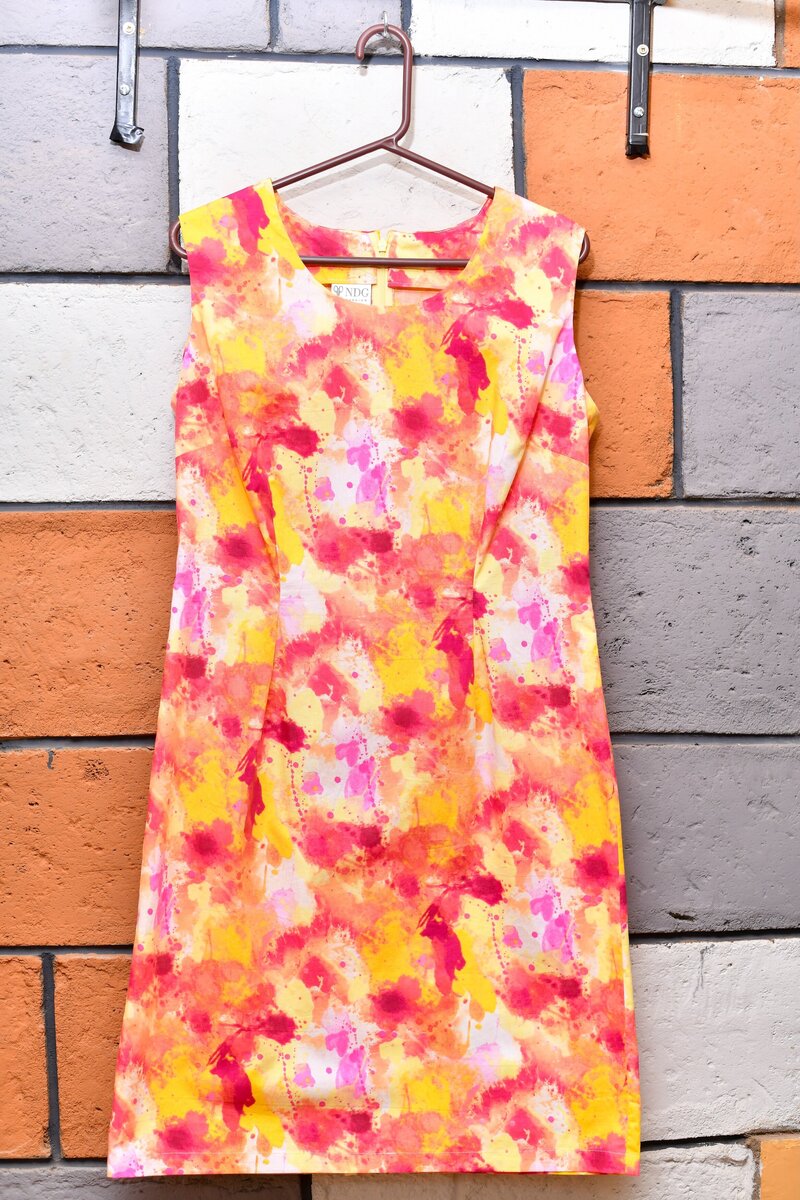
In this case, this red dress is our selected design of which we are to make a sample.
TAB 3: sample making - BASIC BLOCK
03/ Sample Making: Basic Block
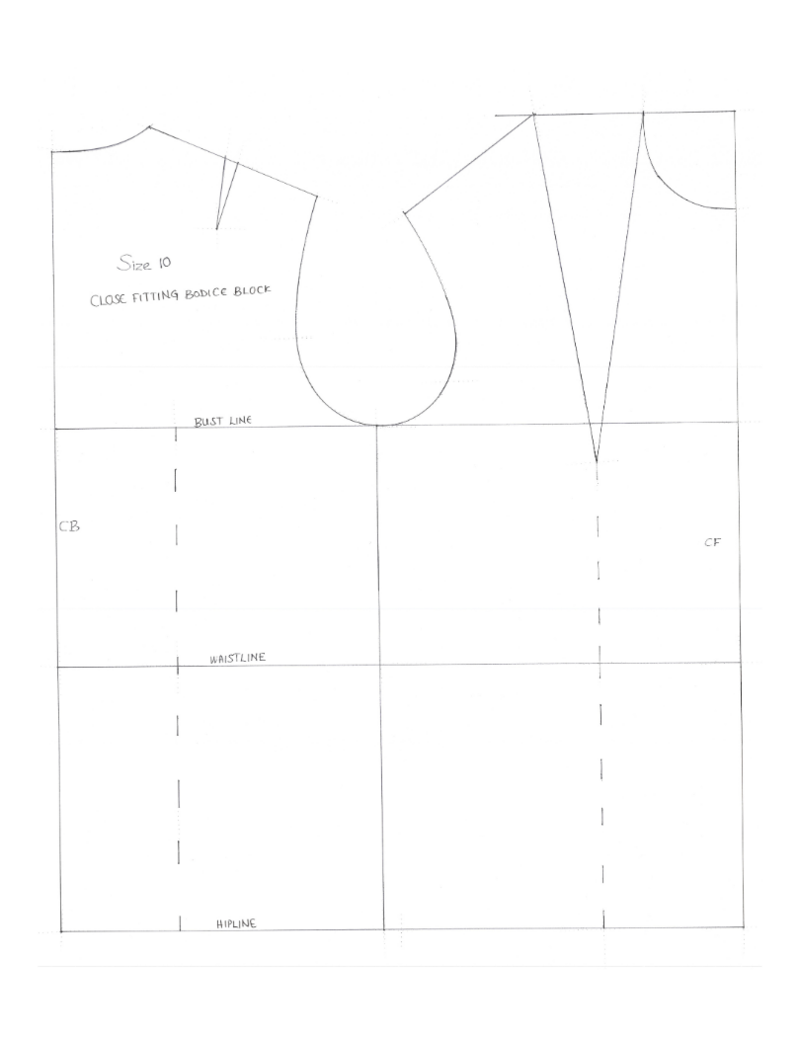
A basic block is a foundational pattern for a garment that represents body measurements, without any design elements.
It serves as a starting point for creating more complex and varied patterns.’
Basic Block = base for fit
TAB 4: SAMPLE MAKING - WORKING PATTERN
04/ Sample Making: Working Pattern
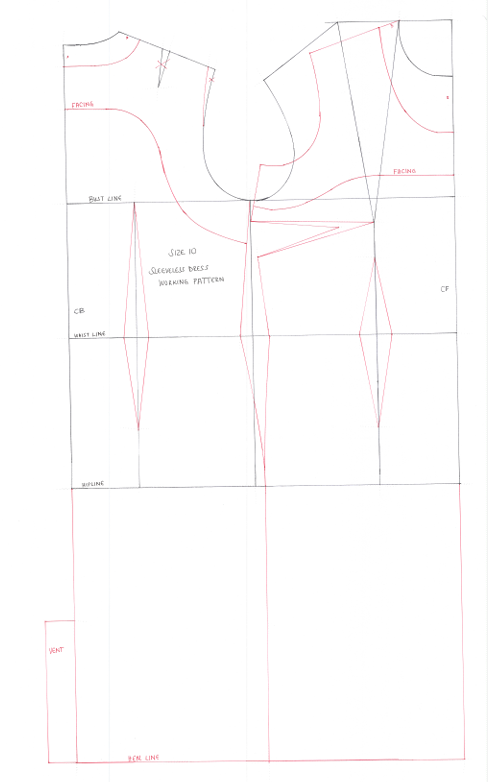
This is the pattern you create from the block where you will draft all your style lines and design features to reflect the selected design.
Working Pattern = Design Development
TAB 5: sample making - FINAL PATTERN
05/ Sample Making: Final Pattern
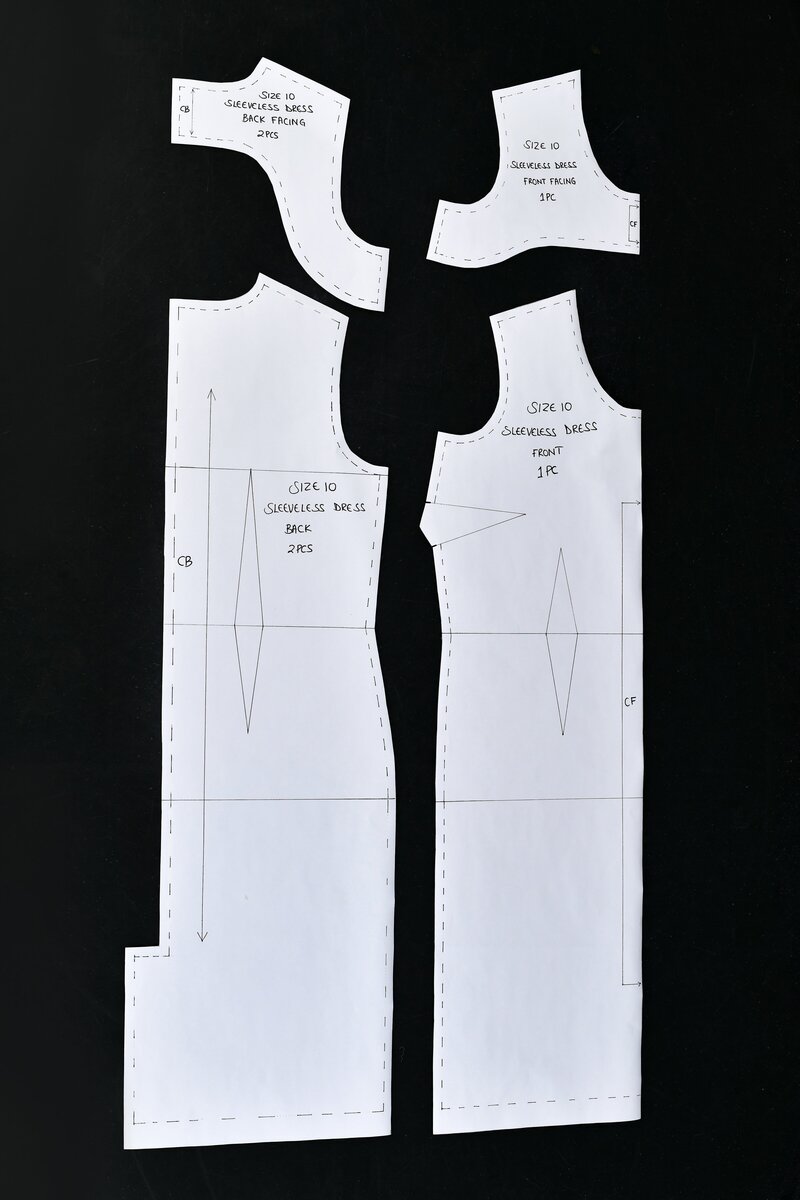
These are the final pattern pieces that are used to cut fabric; all details needed for construction are included.
Final Pattern = For Cutting Fabric
TAB 6: sample making - from paper to fabric
06/ Sample Making: From Paper To Fabric
At this stage we use the final pattern to cut out the fabric pieces of the dress as we prepare for sewing
TAB 7: SAMPLE MAKING - SEWING TECHNIQUES
07/ Sample Making: Sewing Techniques
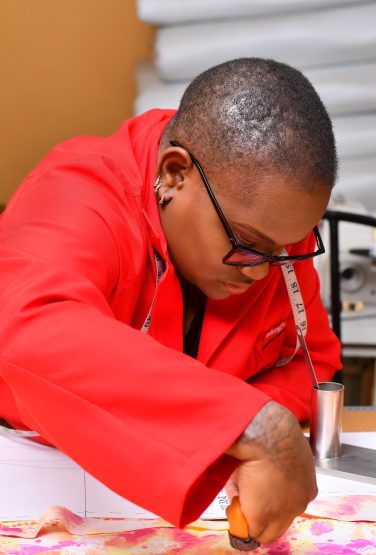
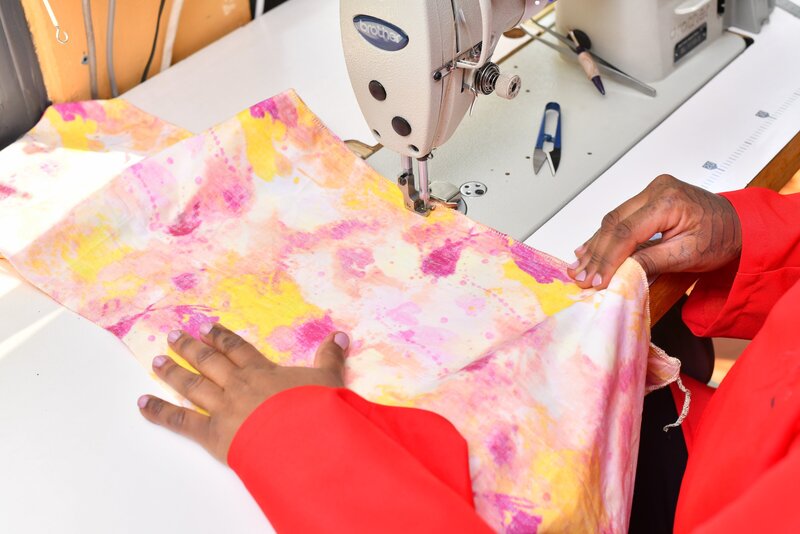
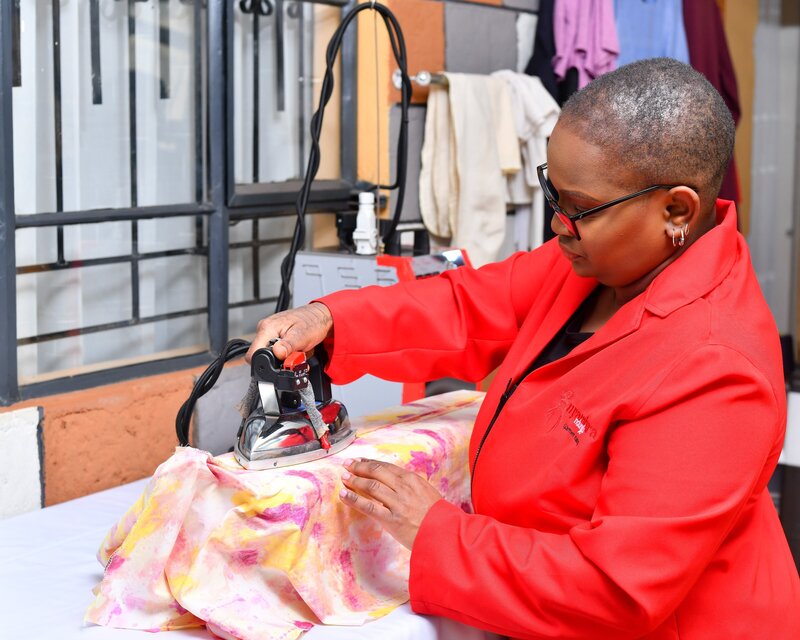
Cutting, marking, and constructing the garment using the proper techniques. It includes stitching, pressing, and the application of accessories.
Professional sewing techniques ensure consistency and efficiency in production while elevating garment quality—making each piece cost-effective, neat, comfortable, and visually appealing.
TAB 8: SAMPLE MAKING - FITTING & ALTERATIONS
08/ Sample Making: Fitting & Alterations
The garment is worn by a model and corrections are noted.
This step enables you to catch errors that can only be visible when the garment is on a real, moving body. Incorporate the corrections to the pattern then construct the garment again; this is repeated until the garment is perfect
With the perfect sample at hand, draft the patterns of the rest of the sizes required.
TAB 9: POINT OF SALE PARTICIPATION
09/ Point Of Sale Participation (e.g at a Shop)
We get to see the garments being fitted and hear the comments directly from the customers.
This enables us to identify & address issues relevant to the garment making techniques.
How To Get Started
01
initial consultation
We’ll start with a phone consultation to talk through what you’re looking for and how I can support your garment making venture.
02
workshop visit
This shall give me visibility of where you are in terms of production, the gaps you may have, your needs and requirements.
03
book a work week
Once we agree on the work that needs to be done, I shall share a proposal and you can book your preferred week(s) with payment to secure your spot.
04
review & handover
At the three-quarter mark of our engagement, you’ll have the opportunity to review and audit the work completed to assess progress and make any necessary adjustments before I complete and handover the work